
An abbreviated wheel is the practical default for most Canadian players. It gives you conditional coverage across multiple tickets while keeping costs manageable — and when you pair it with a disciplined number pool built from astrology, numerology, or pattern analysis, you get a repeatable system instead of structured guesswork.
- Pick abbreviated over full wheels. A moderate-size number pool targeting a 4-if-5 guarantee is a common recommendation for Lotto Max (OLG), Canada's flagship pick-7 game.
- Wheeling organizes play; it doesn't change odds. Every ticket still carries the same per-draw probability. The wheel just prevents duplicate lines and ensures your pool is covered systematically.
- Use wheels for syndicates and disciplined solo play. If you're buying one or two tickets on a whim, a wheel adds cost without meaningful benefit. Lotto Oracle is built to support this exact workflow: pool creation from astrology and numerology inputs, abbreviated wheel generation, and draw tracking.
Table of Contents
- What lottery wheel systems are and how conditional coverage works
- Full, abbreviated, and key-number wheels: which type fits your goals?
- How wheeling works for Canadian games: Lotto Max costs and guarantees
- How to build an abbreviated wheel using astrology, numerology, or pattern analysis
- Combining wheeling with astrology, numerology, and pattern analysis
- Budgeting, ticket management, and syndicate rules for Canadian players
- When wheeling makes sense — and when to skip it
- Key Takeaways
- Why the "system" matters less than the discipline behind it
- Lottooracleapp makes this workflow practical from day one
- Useful sources and further reading
What lottery wheel systems are and how conditional coverage works
A lottery wheel system arranges a chosen pool of numbers into multiple ticket combinations to provide conditional guarantees — expressed as "X-if-Y," meaning you're guaranteed at least one ticket with X matching numbers if Y of the winning numbers fall inside your pool.
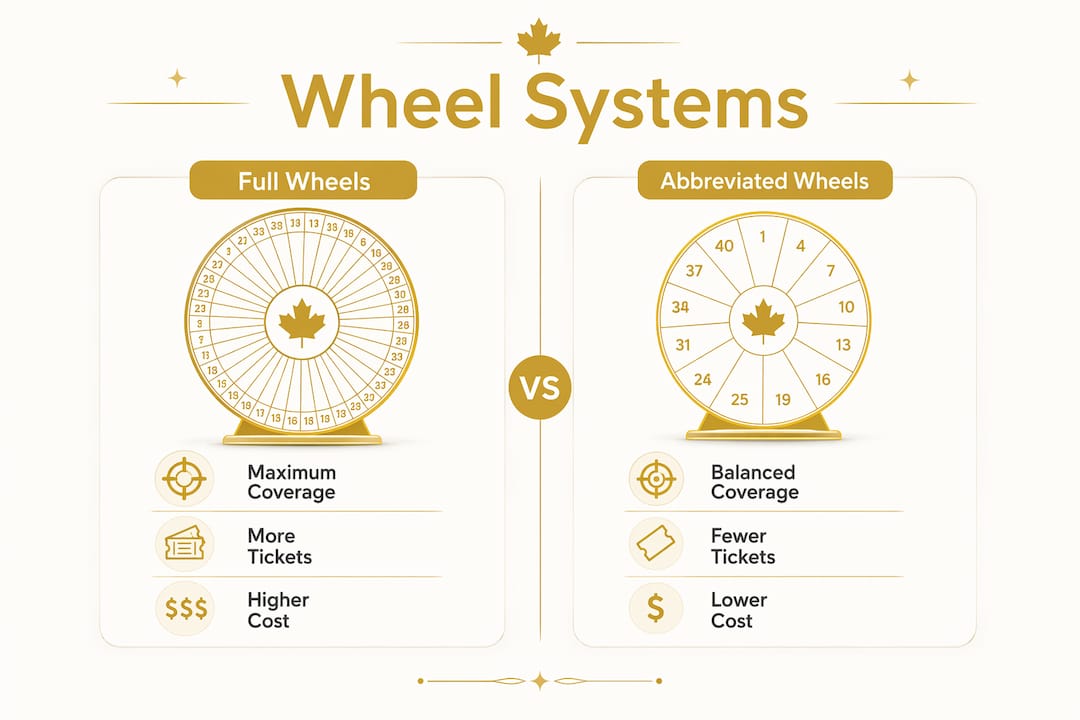
Here's a quick example without the math headache. Choose 10–12 numbers for Lotto Max. An abbreviated 4-if-5 wheel guarantees at least one ticket with four matching numbers — but only if five of your chosen numbers actually appear in the draw. That "only if" is the conditional part, and it matters.
Wheeling does not change the odds of any individual ticket being drawn, and it does not improve expected value. What it does is eliminate duplicate combinations and give your pool structured coverage you couldn't achieve by filling out slips randomly.
Full, abbreviated, and key-number wheels: which type fits your goals?
The answer-first summary: full wheels maximize coverage and cost; abbreviated wheels deliver practical guarantees at a fraction of the price; key-number (banker) wheels anchor your highest-confidence picks on every ticket.
- Full wheel: Every possible combination from your pool. A 10-number pool in a 5-ball game produces 252 tickets — complete coverage, but unaffordable for most solo players. Best for well-funded syndicates.
- Abbreviated wheel: A mathematically optimized subset. The same 10-number pool can be covered to a 4-if-5 guarantee with roughly 20–80 tickets depending on the guarantee level. The practical choice for individuals and small Canadian pools.
- Key-number (banker) wheel: One or two anchor numbers appear on every ticket. Ticket counts drop dramatically, but the entire system collapses if your key number isn't drawn. Use only when multiple independent signals confirm that number.
Common pattern variants worth knowing: key-ratio wheels distribute your pool numbers in fixed proportions across tickets; positional wheels assign numbers to specific draw positions. Pattern analysts and numerology users often gravitate toward key-number wheels because they can lock in a numerology-confirmed "life-path" number as the anchor.
Pro Tip: Only use a key number when at least two independent methods — say, a zodiac transit AND a frequency scan — point to the same candidate. A single hunch is not enough to hinge an entire wheel on.
How wheeling works for Canadian games: Lotto Max costs and guarantees
For Canadian pick-7 games like Lotto Max, abbreviated wheels targeting a 4-if-5 guarantee from a 10–12 number pool balance coverage and cost better than any other configuration.
Typical abbreviated wheel setups involve ranges of tickets and costs that vary depending on the guarantee and number pool size, with higher guarantees requiring more tickets and consequently higher costs.
Full wheels scale far beyond these figures. A full wheel requires playing every possible combination, which rapidly increases the number of tickets needed as the number pool grows, making full wheels costly and often unaffordable for individual players. Abbreviated wheels are the practical middle ground.
Expert guidance: Canadian players are advised to use abbreviated wheels to balance coverage and ticket cost, with a 10–12 number pool targeting a 4-if-5 guarantee cited as the practical benchmark for Lotto Max.
How to build an abbreviated wheel using astrology, numerology, or pattern analysis
You can build a working abbreviated wheel in eight steps. Here's the full sequence:
- Collect candidate numbers using your chosen method: natal chart placements, life-path numerology reductions, or a frequency/hot-cold scan of recent Lotto Max draws.
- Prune to 8–12 best candidates. Cross-reference methods — numbers that appear in both your astrology chart and your frequency analysis carry more weight.
- Decide your guarantee level. For most Canadian players, 3-if-4 (lower cost) or 4-if-5 (stronger coverage) are the realistic targets.
- Generate wheel combinations. Use a wheel generator tool that supports pick-7 games and banker selection, or import your pool into Lotto Oracle.
- Apply filters sparingly. Removing all-odd or all-even combinations reduces ticket count but can void your mathematical guarantee entirely.
- Verify cost and set a firm budget before purchasing. Calculate total tickets × ticket price and confirm it fits your per-draw cap.
- Print or save your lines. Label each combination with a draw date and ticket number.
- Track results across at least 12 draws. This turns anecdote into measurable data and prevents confirmation bias from skewing your evaluation.
Pre-play checklist: budget cap confirmed, guarantee level chosen, key numbers flagged (if any), syndicate shares documented in writing.
Combining wheeling with astrology, numerology, and pattern analysis
Astrology and numerology help produce a disciplined candidate pool. They do not change randomness or guarantee wins — but they do give you a repeatable methodology for selecting which numbers enter your wheel.
Translating esoteric inputs into number candidates is straightforward in practice. Zodiac placements map to number sets (Aries → 1, 9; Taurus → 2, 6, and so on). Life-path reductions produce a shortlist of single or master numbers. Frequency pattern scans flag statistically overdue or recently active numbers. The wheel then multiplies those selections into structured coverage — it doesn't choose them.
Concrete benefits for wheeling: a focused pool is easier to wheel efficiently; group members can reach consensus on candidates using shared astrological or numerological criteria; and a repeatable methodology lets you track whether your selection process has any measurable utility over time.
Limits reminder: A wheel's guarantee is strictly conditional. If the drawn numbers fall outside your chosen pool, no guarantee applies. Filters that remove combinations — even sensible-sounding ones — can destroy the mathematical guarantee entirely. Wheels are coverage structures, not prediction engines.
For readers who enjoy blending tarot symbolism into their number rituals, the Wheel of Fortune in a one-card draw offers an interesting adjacent perspective on wheel-based thinking.
Budgeting, ticket management, and syndicate rules for Canadian players
Set a firm per-draw budget and put your syndicate agreement in writing before anyone buys a single ticket. That's the rule that prevents most disputes.
- Per-person share: Document each member's contribution and the percentage of any prize they're entitled to.
- Ticket purchasing: Designate one person to buy all lines for a given draw; rotate if preferred, but record who bought what.
- Receipt verification: Scan or photograph every ticket immediately after purchase and store in a shared folder.
- Prize distribution: Agree in advance on a minimum prize threshold that triggers a payout versus reinvestment.
- Exit and replacement rules: Define how a member can leave mid-season and how their share is handled.
For ticket management, label each line with the draw date, wheel configuration, and purchaser. A central spreadsheet with columns for line number, ticket ID, draw date, and result makes post-draw checking fast. Lotto Oracle can store your wheel templates for reuse across draws, so you're not rebuilding the configuration from scratch each week.
When wheeling makes sense — and when to skip it
Use a wheel when you have a disciplined number pool, a budget that supports the ticket count, or you're playing in a syndicate. Skip it in these situations:
- One-off players. If you buy tickets twice a year, the overhead of building and managing a wheel isn't worth it.
- Very tight budgets (1–3 tickets). A wheel requires enough tickets to deliver its guarantee. Below that threshold, you're just buying random lines with extra steps.
- Jackpot-only focus. Abbreviated wheels target lower-tier wins. If you're only interested in the jackpot and nothing else, a wheel won't serve that goal better than a Quick Pick.
- Players expecting wheeling to increase jackpot odds. It doesn't. A 252-ticket full wheel gives you 252 times the jackpot chance of one ticket — exactly the same as buying 252 random lines.
Key Takeaways
Abbreviated wheels are the most practical lottery system technique for Canadian players: they deliver conditional lower-tier coverage at manageable cost when paired with a disciplined number-selection method.
| Point | Details |
|---|---|
| Prefer abbreviated wheels | A 10–12 number pool targeting a 4-if-5 guarantee balances cost and coverage for Lotto Max. |
| Wheels organize, not predict | Wheeling eliminates duplicate lines and provides conditional coverage; it does not change per-ticket odds. |
| Set a firm budget first | Calculate total tickets × ticket price before committing; full wheels can reach 252+ tickets for a 10-number pool. |
| Use key numbers sparingly | Lock in a banker number only when two or more independent signals (astrology + frequency scan) confirm it. |
| Lottooracleapp supports the workflow | Lotto Oracle turns astrology and numerology outputs into reusable pools, generates abbreviated wheels, and tracks draw results. |
Why the "system" matters less than the discipline behind it
Most players who try wheeling quit after a few draws because the wins don't match the expectation. The wheel isn't the problem. The pool is. A wheel multiplies whatever you put into it — if your number selection is arbitrary, the wheel just organizes arbitrary choices across more tickets.
The players who get genuine value from wheeling treat it as a test framework: they commit to a fixed pool for a minimum of 12 draws, track every result, and evaluate whether their selection method (astrology, numerology, frequency analysis) is producing candidates that appear in draws more often than chance would predict. That's a real question with a measurable answer. Twelve draws is enough to see a pattern; fewer than that is just noise.
The esoteric inputs are more useful than skeptics admit — not because they predict draws, but because they force discipline. A life-path reduction gives you a shortlist. A zodiac transit narrows it further. That process stops you from wheeling 20 numbers because you "like them all," which is where costs spiral and guarantees weaken. The ritual of selection is the feature, not the mysticism.
Lottooracleapp makes this workflow practical from day one
Most players who want to combine wheeling with astrology or numerology hit the same wall: the number generation, wheel building, and result tracking all live in separate places, and the friction kills the habit.
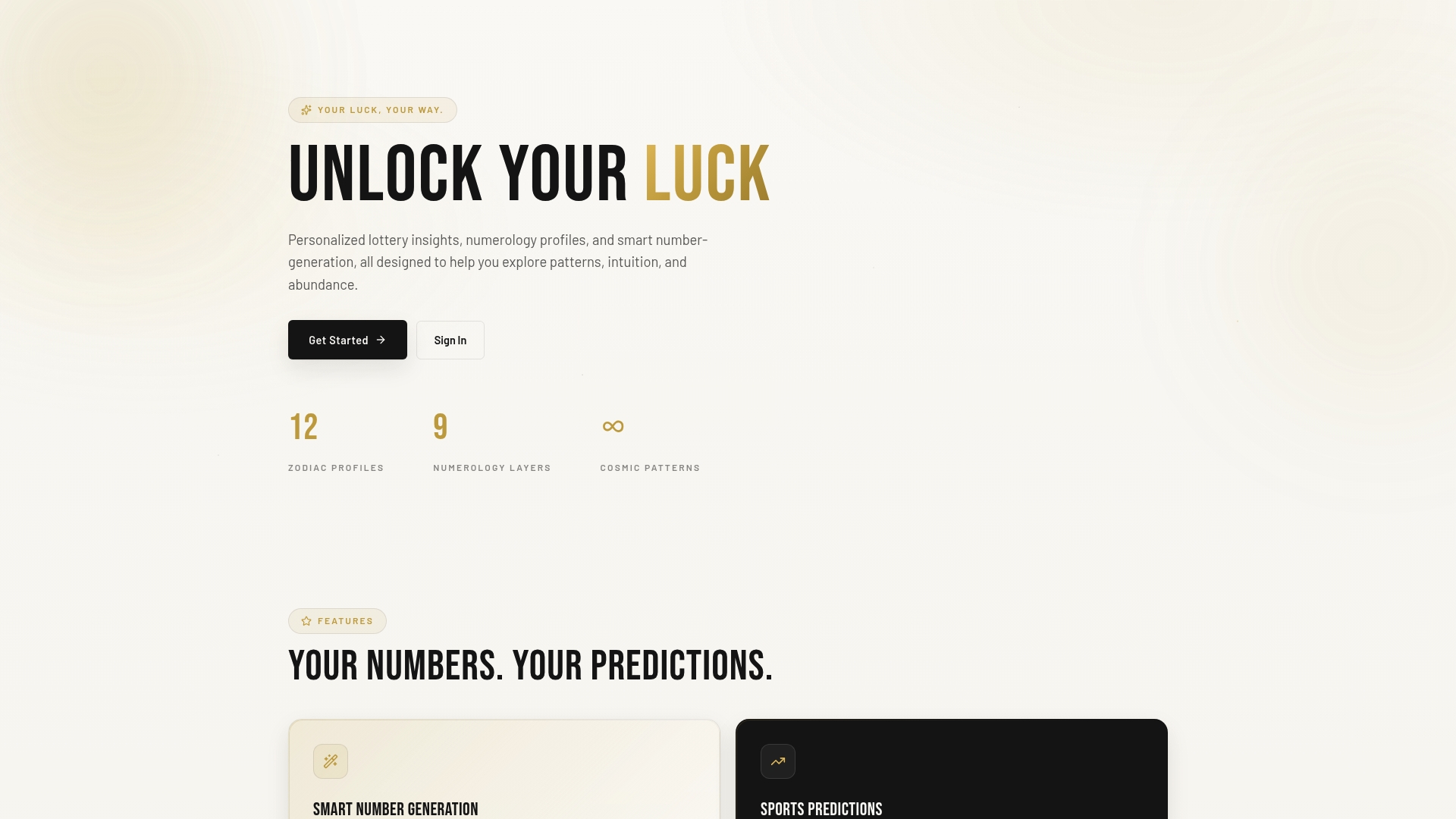
Lotto Oracle brings those steps into one place. You generate personalized number pools from your zodiac profile, life-path number, and draw-history patterns, then export those candidates directly into an abbreviated wheel configuration. The app stores your wheel templates so you can rerun the same setup each draw without rebuilding it. Draw results feed back into your trend tracking, so you can see over time whether your astrology or numerology inputs are producing candidates that hit.
Lotto Oracle runs on a monthly or yearly subscription — no ticket sales, no gambling services, just smarter number guidance. If you're already playing Lotto Max and want a repeatable system behind your picks, start your Lotto Oracle subscription and run your first abbreviated wheel this week. Play responsibly: set a budget you're comfortable losing entirely, and treat every draw as entertainment.
Useful sources and further reading
- Lottery wheeling — Wikipedia: Foundational definition of wheeling, conditional coverage, and the combinatorial math behind guarantee levels.
- DrawAnalytics — Lottery Wheeling Systems Explained: Practical cost comparisons, abbreviated vs. full wheel ticket counts, and guidance on pairing wheels with disciplined number selection.
- GamblingCalc — Lottery Wheel Calculator: Free generator supporting full and reduced systems with banker (key-number) selection for pick-3 through pick-7 games.
- MyLottoGuide — Wheeling System Generator: Explains how filters interact with guarantee integrity — useful before applying any combination filters to your wheel.
- OLG — Lotto Max official rules: Confirm current Lotto Max draw structure, ticket prices, and prize tiers directly with OLG before building any wheel configuration.
Responsible gambling notice: Lottery play is entertainment, not investment. If you're spending more than you can afford or finding it hard to stop, contact the Connex Ontario helpline at 1-866-531-2600 (available 24/7) or visit ConnexOntario.ca for free, confidential support.