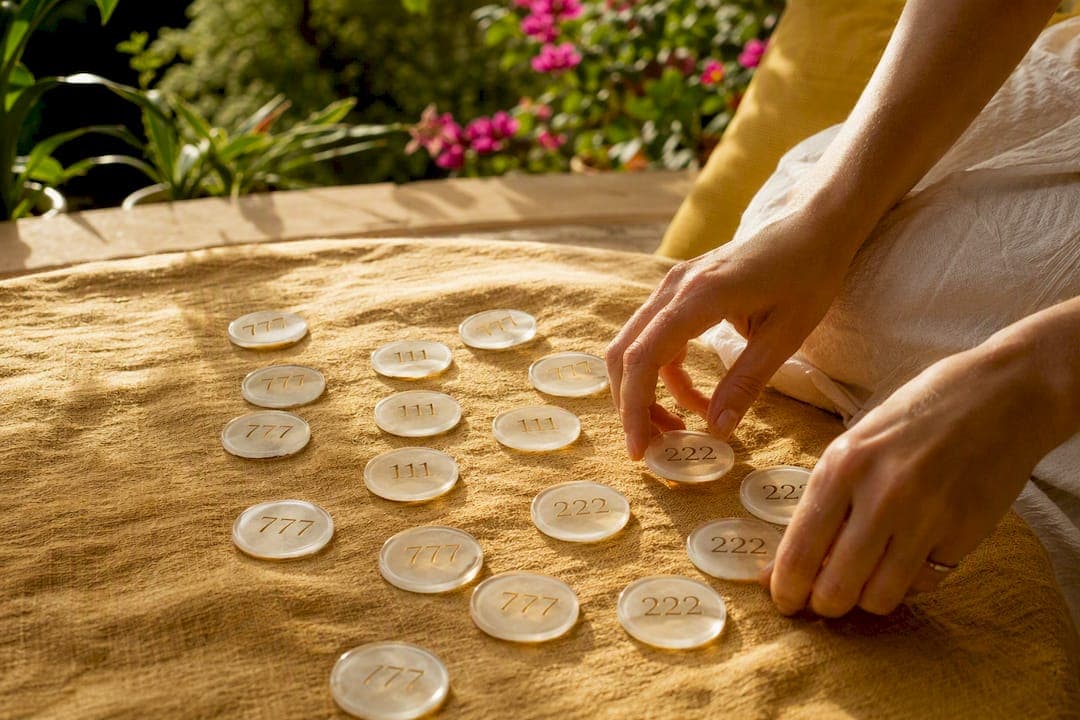
Angel numbers can shape which numbers you play, giving your ticket personal meaning, but they don't change your odds of winning. They convert cleanly into valid lottery entries through a few simple methods covered below, alongside a math reality check on why number choice affects payout splitting more than luck, and a look at how a tool like Lotto Oracle can help you turn a sighting into a ready-to-play pick.
TL;DR:
- Angel number sightings can be translated into lottery picks using simple methods like digit extraction, reduction, sequence splitting, or format mapping, but they do not influence the odds of winning.
- The probability of drawing any specific number in a lottery remains the same regardless of angel number significance, with popular picks like 777 and 888 often leading to payout division.
- Using tools like Lotto Oracle automates the conversion process, combining numerology, astrology, and pattern tracking to generate ready-to-play numbers from sightings.
- Psychological biases such as confirmation bias, clustering illusion, and outcome bias can distort perceptions of angel numbers' significance, so maintaining honest sighting logs is essential.
- Pairing numerology with meditation and reflection helps ground the ritual, focusing on individual intuition rather than superstition, but does not increase chances of winning.
Table of Contents
- What Angel Numbers Mean for Your Lottery Picks
- Common Angel Numbers and What They Typically Mean
- How to Turn an Angel Number Into a Valid Lottery Pick
- Why Every Lottery Number Has the Same Odds
- How Lotto Oracle Turns a Sighting Into a Ready-to-Play Pick
- Why Your Brain Wants 777 to Mean Something
- Bringing Intuition and Meditation Into Your Number Choice
- A Practical Take on Playing With Meaning
- Turn Your Next Sighting Into a Real Ticket With Lotto Oracle
- Sources
What Angel Numbers Mean for Your Lottery Picks
Angel numbers are repeating digit sequences, 111, 222, 777, 888, that show up on clocks, receipts, license plates, and get read as spiritual signposts rather than random noise. The tradition treats repetition as the message: the more a number insists on showing up, the more attention it's asking for. Reader's Digest traces this back to numerology's basic premise that repeating sequences carry symbolic weight, not literal instructions.
Most interpretive systems follow a few consistent rules. A single digit points to a broad theme (1 for new beginnings, 6 for balance). A repeated sequence amplifies that theme and suggests urgency. Master numbers like 11 or 22 get treated as carrying extra intensity, sometimes read as double signals rather than simple doubling.
Practitioners generally read sightings through:
- Repetition strength: three or four repeated digits (777, 7777) read as louder signals than a single appearance.
- Context: where and when you saw it (during a stressful moment, right before a decision) shapes the interpretation.
- Personal association: your birthday, an anniversary, or a number tied to a loved one changes what a sequence means to you specifically.
- Sequence order: ascending runs like 1234 tend to symbolize progress or momentum rather than a fixed theme.
Lottery players who use angel numbers usually aren't chasing a guarantee. They're using a familiar spiritual framework to add intention to a ticket they were going to buy anyway. That's a reasonable way to play, as long as the ritual stays separate from any expectation about the draw itself.
Common Angel Numbers and What They Typically Mean
Here's a working reference for the sequences that show up most often in lottery-adjacent numerology, drawn from the interpretations Allure and other lifestyle outlets commonly cite.
- 000: a fresh start or a clean slate, often read before a big decision.
- 111 / 1111: alignment and manifestation, the most commonly cited "pay attention now" signal.
- 222: balance and partnership, frequently tied to patience rather than action.
- 333: creative encouragement, sometimes linked to support from a peer or a group.
- 444: protection and stability, one of the calmer, more grounding sequences.
- 555: change arriving, often read as transition rather than reward.
- 666: recalibration around material focus, not inherently negative despite the reputation.
- 777: spiritual completion and inner alignment, though its casino association makes it the most requested lottery number by far.
- 888: abundance and financial flow, the sequence most often (and most loosely) tied to money.
- 999: closure, an ending that clears space for something new.
- 1234: forward momentum, read as steady progress rather than a single event.
- 1212: awakening, often noticed during periods of change.
The split matters here: 777 and 888 carry strong cultural "money" associations, while 000, 333, and 999 stay closer to purely spiritual territory. Parade notes that 777's jackpot reputation is a cultural overlay on top of its original spiritual meaning, not the meaning itself.
How to Turn an Angel Number Into a Valid Lottery Pick
Seeing 777 on a receipt doesn't hand you a ticket. You need a method to translate a sequence into numbers that actually fit your game's format, whether that's a pick-3 slip, a pick-6 lotto board, or a scratch-style pool. Here are four techniques that work across most formats.

Digit extraction. Take each digit as its own pick. Seeing 777 gives you three 7s, which you can spread across three different ticket lines or combine with other digits to fill out a board. A sighting of 1234 gives you four standalone candidates: 1, 2, 3, 4.
Reduction and summing. Add the digits down to a single number, then expand outward. 1234 reduces to 1+2+3+4=10, then to 1. From there, generate a small cluster around that root (1, 10, 19, 28, 37) to fit a game with a higher number range.
Sequence splitting. Break a longer run into pairs or triples sized for your game. 777 splits into "77" for a pick-2 slot, or you keep it whole for pick-3. A four-digit sighting like 1234 splits into "12" and "34" for two separate two-digit selections.
Format mapping. Match your converted numbers to the actual range your lottery uses. A pick-6 lotto with a 1-49 range needs different scaling than a pick-3 daily draw, so a digit-extraction result from 888 (three 8s) might become 8, 18, 28 for a wider-range game.
Worked example: you keep seeing 777. Digit extraction gives 7, 7, 7. Reduction gives 7+7+7=21, then 2+1=3. For a six-number lotto, you might land on 7, 17, 21, 27, 37, plus one wildcard from your own life (an age, an address digit). For 1234, splitting gives "12" and "34," both valid picks in most pick-6 formats without further math.
- Avoid filling an entire ticket with numbers under 31, since that's where birthday-based picks cluster.
- Rotate one digit each time you play the same angel number, so you're not repeating an identical combination draw after draw.
- Use box bets where your game allows it, since that covers digit permutations without multiplying your ticket count.
Pro Tip: Keep a small log of every angel number sighting and which conversion method you used. Over a few months, you'll have a personal shorthand for turning any sequence into a pick in under a minute.
Why Every Lottery Number Has the Same Odds
Here's the part numerology can't touch: every number in a standard lottery draw carries an identical probability of being drawn, every time, regardless of how many angel numbers pointed you toward it. Sigma confirms the drawing mechanism itself is blind to numerological patterns. A ball machine doesn't know 777 means anything.
What number choice does affect is your payout if you win, through prize-splitting. Popular numbers, birthdays, 7s, round numbers, get picked by thousands of other players. Win with a heavily-played combination and you're dividing the jackpot with everyone else who chose it. This is where the practical adjustment lives: combining personal picks with a swap toward less-played numbers, rather than treating frequency data as a "luck" indicator, protects your payout without touching the ritual at all.
How Lotto Oracle Turns a Sighting Into a Ready-to-Play Pick
Lotto Oracle standardizes the conversion process above so you're not doing digit math on a napkin every time 111 shows up on a clock. The app pairs numerology with astrology and pattern tracking to build picks you can actually use.
- Zodiac-based number guides that layer your sign onto a sighting for a second interpretive angle.
- A numerology converter that runs digit extraction and reduction automatically instead of by hand.
- A dream-to-number workflow for sightings that show up outside waking life.
- Daily picks with trend overlays, so a frequency check happens in the background instead of a separate step.
A typical flow looks like: you log a sighting, 777, select a pick-mode, and the app maps it to your specific game's format. Lotto Oracle doesn't sell tickets and doesn't promise a win. It builds a play-ready set from a spiritual input while keeping the ritual, the part that actually matters to most players, fully intact.
Why Your Brain Wants 777 to Mean Something
Confirmation bias is the biggest distortion in this whole practice. Once you decide 777 is your number, you start noticing it everywhere, on odometers, phone screens, receipt totals, while ignoring the dozens of other three-digit combinations you saw that same day and forgot instantly. Your brain isn't tracking a pattern. It's filtering for the one it already expects.
The second trap is the clustering illusion, treating a short streak of matching sightings as statistically meaningful when random sequences produce clusters all the time. Seeing 777 three times in a week feels significant, but three repeats in seven days of constant number exposure (clocks, prices, plates) is well within ordinary randomness.
Then there's outcome bias: remembering the one time an angel number lined up with a small win, while forgetting the dozen times it didn't. That selective memory builds false confidence in a method that hasn't actually been tested against its failures.
None of this means the practice is worthless, it means the meaning is personal and psychological, not predictive. The fix is simple: keep your sighting log honest. Write down every occurrence, not just the ones that feel dramatic, and note whether the follow-up ticket won or lost. A log without survivorship bias is the fastest way to see the pattern for what it actually is, a reflection of attention, not a preview of a draw.
Bringing Intuition and Meditation Into Your Number Choice
Numerology gives you a system; intuition gives you a filter for which part of that system to trust on a given day. A short meditation before you finalize a ticket, five minutes, eyes closed, no phone, tends to clear the noise that makes people overreach on a sequence's meaning. You're not meditating to receive numbers from the void. You're meditating to slow down enough to notice which sighting actually stuck with you versus which one you're forcing to matter.

A simple practice: after logging a sighting, sit with it for a minute and ask what feeling came with it, urgency, calm, resistance. That feeling, more than the digits themselves, is usually the more honest signal, since it's telling you about your own state rather than predicting an external event. Some players pair this with a short walk or a few slow breaths before they touch the conversion methods, treating the math as the second half of a two-part process rather than the whole thing.
This won't improve your odds. What it does is keep the practice grounded, treating the number as a prompt for reflection rather than a formula to force into a win. That distinction is what separates a meaningful ritual from a superstition that quietly turns into overspending.
A Practical Take on Playing With Meaning
Rituals make lottery play more interesting, and there's nothing wrong with that. Choosing numbers tied to a sighting you noticed and sat with beats grabbing a random quick-pick out of habit, if only because it makes the act of playing feel deliberate instead of automatic.
Keep the stakes modest. Track what you play and what happens, honestly, including the losses. That log is the only real feedback loop you have, and it'll tell you faster than any theory whether a method is worth repeating. Try the digit-extraction or splitting techniques above on the next number that catches your attention, and treat the result as an experiment, not a prediction.
— amsd
Turn Your Next Sighting Into a Real Ticket With Lotto Oracle
Doing the digit math by hand works fine once. Doing it every time 111 shows up on your dashboard gets tedious fast, and that's the gap Lotto Oracle closes. Instead of manually splitting sequences or reducing digits on paper, you log a sighting and get a play-ready set mapped to your actual game format in seconds.
The Lotto Oracle subscription unlocks zodiac number guides, a numerology converter, dream-to-number workflows, and daily trend overlays, all the methods covered above, running automatically instead of on a napkin. If you want to go deeper on the astrology side first, the zodiac lottery guide is a solid starting point before you subscribe. When you're ready to convert your next angel number into an actual entry, start with Lotto Oracle and see what your sighting maps to.
Sources
- Sigma
- What are angel numbers? — Reader's Digest
- What are angel numbers? — Allure
- 777 angel number meaning — Parade