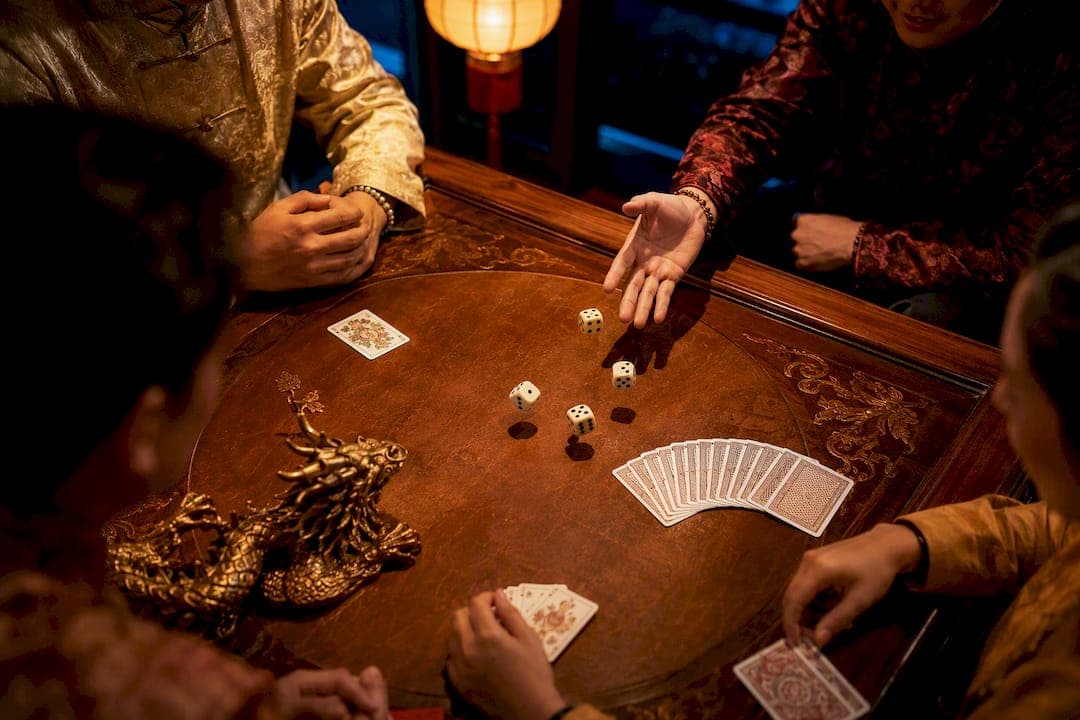
Astrology can shape how you gamble and when you play, but it does not change the math. Use Chinese zodiac insights to pick games that fit your temperament, time your sessions with more discipline, and set limits before you sit down. Treat every "lucky" number or day as a behavioral cue, never a guarantee. The house edge stays exactly where it was before you checked your sign.
TL;DR:
- Chinese zodiac gambling offers behavioral insights based on birth-year animals and elements but does not alter the mathematical house edge in any game.
- Matching temperament to game type can guide game choices, such as impulsive signs favoring fast games and patient signs preferring long-term sessions.
- Superstitions like lucky numbers or years should be used for discipline, not as a justification for risky bets or raising stakes impulsively.
- Tracking zodiac-related timing, such as moon phases or Jupiter transits, can help improve self-awareness but does not influence game odds.
- Implementing strict bankroll rules and stop thresholds remains essential, as astrology cannot impact the odds or the expected value of bets.
Table of Contents
- What Chinese Zodiac Gambling Actually Means
- Sign-By-Sign Gambling Notes for Every Chinese Zodiac Animal
- Timing Your Sessions With Moon Phases and Planetary Cycles
- Why Astrology Never Changes the House Edge
- Where Zodiac Gambling Traditions Actually Come From
- Superstitions Worth Questioning Before You Bet
- What Zodiac-Based Betting Looks Like in Practice
- How Lotto Oracle Applies Zodiac Insight Responsibly
- Sources
What Chinese Zodiac Gambling Actually Means
Chinese zodiac gambling refers to using your birth-year animal, and the element tied to it, as a lens for choosing games and pacing your play. That's different from Western sun-sign astrology, which tracks the sun's position at birth. The Chinese system cycles through 12 animals, Rat, Ox, Tiger, Rabbit, Dragon, Snake, Horse, Goat, Monkey, Rooster, Dog, and Pig, each paired with one of five elements: Wood, Fire, Earth, Metal, or Water. The element modifies the animal's baseline personality, so two people born under the same animal in different element years can gamble very differently.
The practical payoff is behavioral, not predictive. A Tiger's typical impulsiveness plus a Fire year can mean faster bets and shorter attention spans at the table. An Ox with an Earth element tends toward grinding, patient play, the kind of temperament that fits multi-hour poker sessions better than fast slots. Chinese zodiac structure has long linked the Dragon to the strongest luck reputation among the 12 animals, though that's cultural tradition, not a statistical edge.
Here's how to match temperament to game type:
- Fast-decision games (slots, quick-hand blackjack): favors signs known for restlessness, like Tiger or Monkey.
- Grinding, patience-based games (extended poker sessions, long-shot lottery pools): favors Ox, Goat, or Dog temperaments.
- Social or bluff-driven games (poker tables, group betting pools): favors Rooster or Dragon energy, which leans expressive and competitive.
- Numbers-based play (lottery, keno): open to any sign, but pair with a personal lucky-number check first.
Sign-By-Sign Gambling Notes for Every Chinese Zodiac Animal
Each animal carries a distinct betting temperament, according to zodiac gambling tendency research. Use these as starting points, not scripts.
- Rat. Sharp and calculating, Rats do well at games requiring quick math like blackjack. Set a hard stop-loss before playing since Rats tend to chase small edges too long.
- Ox. Methodical and patient, Ox players suit long poker sessions or slow lottery pools better than fast games. Try number 2 or day Tuesday as a testing point.
- Tiger. Bold and impulsive, Tigers need slowdown rules, like a mandatory five-minute break after every loss, before their next wager.
- Rabbit. Cautious by nature, Rabbits do best with modest, steady stakes rather than big single bets.
- Dragon. Confident and often labeled the luckiest animal, but that reputation can encourage overconfidence at the table. Diversify game choice instead of doubling down on one.
- Snake. Intuitive and strategic, Snakes read patterns well, which suits poker or skill-leaning games over pure chance.
- Horse. Energetic and social, Horses gravitate toward group betting pools but should watch for peer-pressure overspending.
- Goat. Thoughtful and risk-averse, Goats do well setting a fixed budget and sticking to it without deviation.
- Monkey. Clever and experimental, Monkeys enjoy trying new games, so a rotating small-stakes budget works better than one big commitment.
- Rooster. Detail-oriented and competitive, Roosters do well tracking their own results, since they respond well to data over gut feeling.
- Dog. Loyal and steady, Dogs prefer familiar games and consistent routines, so a repeat lottery number strategy can suit their temperament.
- Pig. Generous and optimistic, Pigs should watch for overspending during social gambling, since generosity can bleed into the bankroll.
A common misbelief worth clearing up: your ben ming nian, the year that matches your birth-year animal, is often assumed to be automatically lucky. Traditional sources actually treat it as a year calling for extra caution, not a green light to raise stakes.
Timing Your Sessions With Moon Phases and Planetary Cycles
Session-level timing gets the most attention from practitioners, and the Moon is the usual starting point. The Moon shifts phase roughly every 29.5 days, and gambling-astrology writers useful and new moons as markers for heightened emotion or intuition, worth noting since emotional state affects bet sizing and patience far more than any planetary chart does.
Jupiter works on a longer cycle, treated in Chinese zodiac guidance as the planet most associated with expansion and luck. Practitioners watch Jupiter transits as multi-month windows worth paying attention to, rather than single-session signals. Planetary hours, a system dividing each day into planet-ruled hours, offer a lower-friction option: a quick lookup table takes about 10 minutes to check before you play.
- Check the current moon phase before a big session; note your mood and stake decisions afterward.
- Track Jupiter's zodiac position monthly rather than daily. It moves too slowly to matter session to session.
- Use planetary-hour charts as a simple pre-game checklist, not a betting trigger.
Pro Tip: Log eight to twelve sessions against the moon phase at the time, then review your own win rate, bet sizing, and mood. Patterns you find this way belong to you, not a generic horoscope, and they're worth far more than any single lucky-day claim.
This kind of tracking is exactly what separates real personal insight from confirmation bias, since testing your own results against timing data shows you what actually shifts your behavior.
Why Astrology Never Changes the House Edge
Astrology can improve your decisions and timing. It cannot touch the probability math sitting underneath every game. A roulette wheel pays out the same regardless of moon phase, and a lottery draw doesn't care what year you were born.
Roughly one in three players who chase losses do so after convincing themselves a "lucky" signal justified one more bet, a pattern responsible-gambling researchers flag consistently across betting communities. Concrete rules beat vague optimism every time:
- Set a session budget before you start, and treat it as non-negotiable once you sit down.
- Size individual stakes at 0.5% to 2% of that session budget, a rule borrowed from disciplined poker player strategy.
- Fix a stop-loss and a stop-win threshold in advance, and walk away when either hits.
- Watch for red flags: chasing losses, using a horoscope to justify raising stakes, or playing while upset.
Understanding basic lottery probability helps here too, since knowing the actual odds makes it much harder to talk yourself into "the universe owes me this one." If any of the red flags above sound familiar, safer-play resources and self-exclusion tools, including guidance from gaming safety advocates, are worth reviewing before your next session.
Where Zodiac Gambling Traditions Actually Come From
Chinese zodiac gambling culture didn't start with modern betting apps. It traces back centuries to agricultural calendars and folk religion, where animal years were used to forecast harvests, marriages, and fortune generally, gambling included. Lunar New Year celebrations across China and Southeast Asia have long featured card games and dice play tied to the incoming animal year, treated as both entertainment and a ritual test of the year's luck.
The Dragon's reputation as the luckiest animal comes from imperial symbolism. Dragons represented emperors and cosmic power, so any year associated with that animal absorbed an outsized reputation for fortune, wealth, and success. That cultural weight still shows up today in casino design across Asia, where dragon imagery and the number eight, considered lucky because it sounds similar to the word for "prosperity" in Cantonese, appear constantly on floors, table names, and slot themes.
Numerology and the zodiac calendar merged early on, since both systems assign meaning to numbers and cycles. Temple fairs during Lunar New Year often included informal betting games based on the year's animal, and those traditions migrated into formal gambling halls as commercial casinos grew. What started as folk ritual became marketing shorthand, then eventually a genuine framework recreational gamblers use to structure how, not whether, they play.
Superstitions Worth Questioning Before You Bet
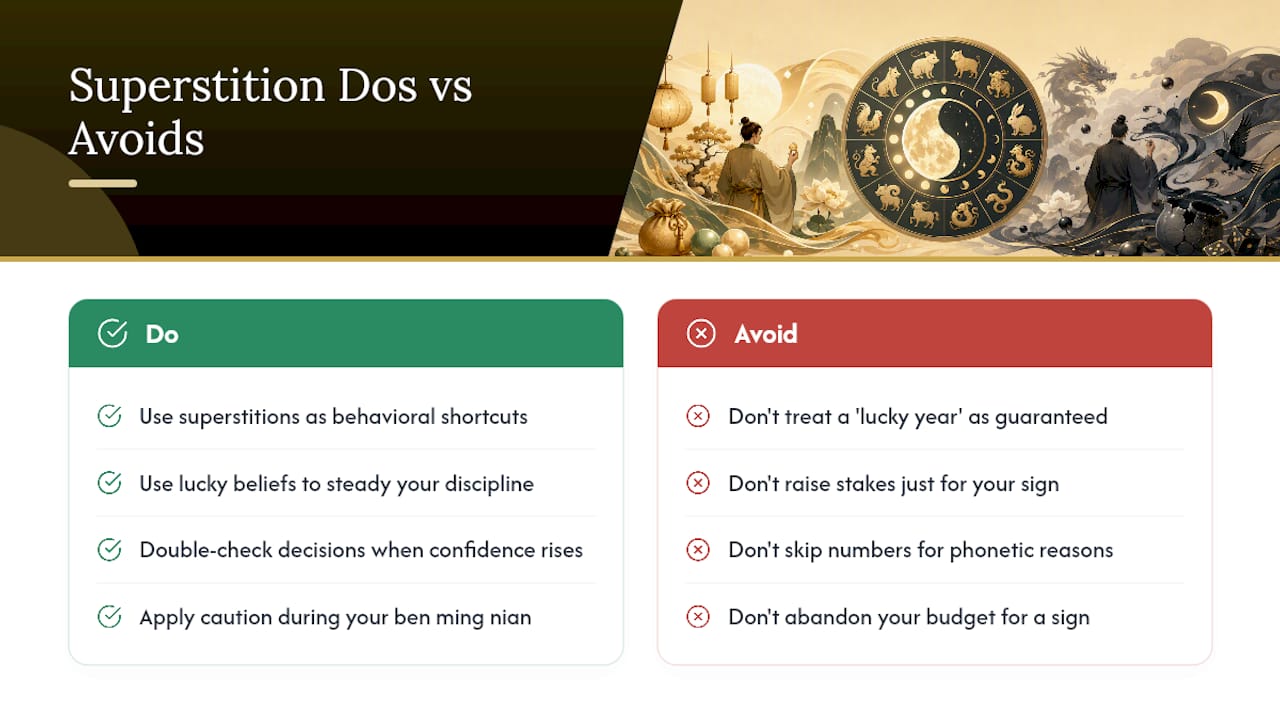
Some zodiac gambling beliefs hold up as useful behavioral shortcuts. Others are just noise dressed up as tradition. Knowing the difference protects your bankroll.
The biggest myth: your zodiac sign's "lucky year" guarantees a win streak. It doesn't, and treating it that way is exactly how overconfident bets happen. The Dragon's luck reputation, for instance, gets misread constantly as license to raise stakes during Dragon years, when the more useful reading is simply "confidence runs high this year, so double check you're not overextending."
A second common superstition involves numbers. Eight is lucky, four is unlucky in Chinese numerology because it sounds like the word for "death." Players sometimes avoid entire betting combinations because of a single unlucky digit, which can mean skipping a personally meaningful number, like a birthday, for no real reason beyond phonetic coincidence in a language they may not even speak.
A third myth worth flagging is ben ming nian confusion, covered earlier: assuming your birth-year animal year is automatically favorable, when the tradition actually recommends caution.
The honest impact of these superstitions cuts both ways. Believing in a lucky number can build the kind of confidence that steadies your hand and improves discipline. The same belief, taken too literally, becomes an excuse to abandon a budget the moment a "sign" appears. The superstition itself is neutral. How you use it determines whether it helps or hurts.
What Zodiac-Based Betting Looks Like in Practice
Consider a Snake-sign player who leans into their sign's reputation for pattern recognition. Rather than treating that trait as innate luck, they apply it concretely: tracking number frequency in lottery draws over several months and adjusting picks based on observed patterns rather than gut feeling. That's zodiac self-knowledge, patience and analytical thinking, translated into a repeatable habit.
A different example: a Tiger-sign bettor who knows impulsiveness is their weak spot builds a rule around it instead of fighting it constantly. Every loss triggers a mandatory ten-minute walk before the next bet. The zodiac trait didn't disappear, but the behavior around it changed, and that's the entire value proposition of using astrology this way.
Group betting pools offer a third pattern. Horse and Rooster signs, both socially driven, tend to organize informal office lottery pools around Lunar New Year, often picking numbers tied to the incoming animal year or a shared birthday. The social structure itself, agreed contribution limits, a shared spreadsheet, a set cutoff date, does more for discipline than any single lucky number does.
None of these examples involve someone predicting a jackpot from a horoscope. They involve someone using zodiac self-knowledge to build a habit, a limit, or a testing method. That's the actual skill here: translating a personality trait into a rule you'll actually follow, then checking whether it works for you specifically over enough sessions to matter.
How Lotto Oracle Applies Zodiac Insight Responsibly
Some apps combine Chinese zodiac profiles, numerology, and pattern tracking to generate personalized number suggestions and session guidance, not tickets, not guarantees. It's built for players who want structure behind their number choices rather than pure guesswork.
Such tools convert your animal sign and element into practical output: suggested number sets, daily luck readings, and session pacing notes that reflect your temperament, whether that means slower, smaller bets for impulse-prone signs or diversified picks for signs drawn to experimentation. These suggestions often are delivered through subscription models built around insight, not outcome promises.
— amsd
Ready to see your own zodiac profile translated into a number strategy? Lotto Oracle builds personalized lottery insights from your Chinese zodiac sign, numerology, and pattern history, all inside one subscription, with no tickets sold and no outcomes promised. Combine it with the bankroll rules covered above, and you get a system that respects both your temperament and the actual math.
Sources
- Zodiac signs with a knack for gambling - Times of India
- Chinese Zodiac & Gambling: Animal Signs Luck Guide