
Every valid lottery combination carries identical odds. What you can actually control is whether you share a jackpot and how much you enjoy the process of playing. That's the whole game in two sentences.
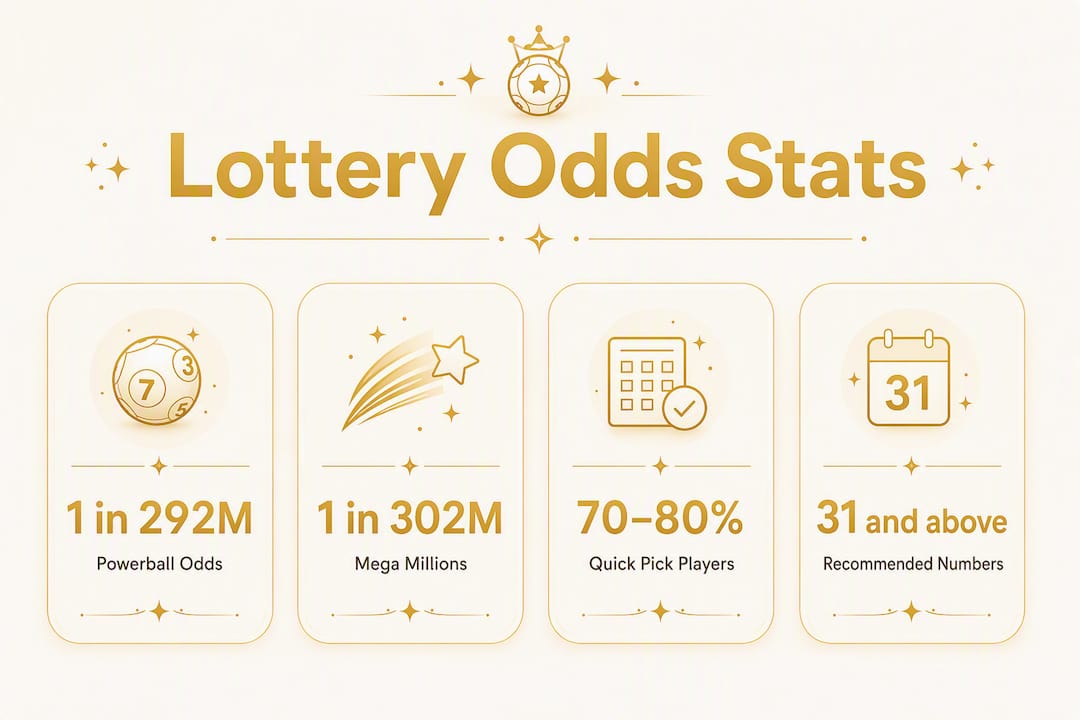
About 70–80% of jackpot winners used Quick Pick because 70–80% of tickets sold are Quick Pick tickets; winners mirror that proportion, reflecting market share rather than a mathematical edge. So if you prefer choosing your own numbers, you're not giving anything up statistically.
Pro Tip: Include at least two or three numbers above 31 in every ticket. Most players use birthdays, which caps their picks at 31 and creates heavy clustering in the low range. Higher numbers reduce the chance of splitting a jackpot.

Table of Contents
- What do lottery odds actually tell you about picking numbers?
- How do personalization methods like numerology and astrology actually help?
- How can you maximize your payout if you actually win?
- How do you generate play-ready numbers using numerology or astrology?
- What does a subscription prediction service actually give you?
- Key Takeaways
- Why personalized picks matter more than most players realize
- Lotto Oracle gives you personalized, repeatable picks in one place
- Sources and further reading
What do lottery odds actually tell you about picking numbers?
Powerball gives every 5+1 combination odds of approximately 1 in several hundred million. Mega Millions odds are similarly very long. Those numbers don't shift based on which combination you choose.
| Game | Odds of Jackpot | Numbers Drawn |
|---|---|---|
| Powerball | 1 in 292,201,338 | 5 from 1–69, 1 from 1–26 |
| Mega Millions | 1 in 302,575,350 | 5 from 1–70, 1 from 1–26 |
Buying two tickets doubles your coverage, but your odds per ticket remain extremely low. The only way to improve raw probability is to buy more unique tickets; no selection method changes that.
1 in 292,201,338 — the odds of matching all six Powerball numbers on a single ticket, regardless of how those numbers were chosen.
Draws are also statistically independent. A number that hasn't appeared in 20 draws is not "due." Each draw resets completely. Past results don't influence future independent draws, which is why hot/cold number tracking doesn't improve your probability. It can still be fun to watch patterns, but treat it as entertainment, not a forecasting tool.
No algorithm, subscription, or system can increase the mathematical chance of a draw outcome. Selection methods only affect what happens if you win.
How do personalization methods like numerology and astrology actually help?
They don't change your odds. What they do is make the experience more meaningful, more repeatable, and sometimes smarter from a payout perspective. Here's a quick breakdown of the main approaches:
- Quick Pick / random generators: Naturally avoids human clustering. Modern generators use cryptographically secure RNGs that produce unpredictable combinations across the full valid range. The practical benefit is built-in spread.
- Numerology: Derives numbers from your name, birth date, or life path number. Produces a consistent, repeatable set tied to personal meaning. See numerology lottery methods for worked examples.
- Astrology / zodiac picks: Maps planetary positions or your birth chart to number ranges. Changes with transits, so picks can vary by draw date.
- Birthday and anniversary picks: Emotionally resonant but concentrates numbers in the 1–31 range, increasing split risk.
- Dream-inspired picks: Converts imagery or symbols into numbers using traditional interpretation guides. Purely personal, high entertainment value. Dream lottery number methods walk through the conversion process.
- Delta systems: Derives a ticket from the differences between consecutive numbers rather than the numbers themselves. Produces less clustered results than pure date-based picks.
- Wheeling systems: Buys structured sets of tickets to guarantee certain match patterns if a subset of your numbers hits. Raises cost significantly and rarely produces positive expected value once ticket price is factored in.
Pro Tip: When using any personalization method, force at least two or three picks above 31. It keeps the emotional connection to your numbers while reducing overlap with the birthday-heavy crowd.
How can you maximize your payout if you actually win?
Jackpots in pari-mutuel games are split equally among all winning tickets. So if your combination matches 40 other players, you're dividing the prize 41 ways. Selection doesn't change your chance of winning, but it can change how much you take home.
The birthday bias is the most common clustering problem. When most players cap their picks at 31, numbers like 7, 11, 14, and 23 get played constantly. Picking 34, 47, or 58 doesn't improve your odds, but it does reduce the field of people likely to share your ticket.
Obvious patterns carry the same risk. Combinations like 1-2-3-4-5, multiples of 5, or numbers that form a diagonal line on the play slip are played by thousands of people every draw. A quick-pick terminal won't choose those. If you're picking manually, avoid them.
A well-spread ticket looks something like this: two numbers in the low range (1–20), two in the mid range (21–45), and one or two in the high range (46+), with a mix of odd and even. Balanced combinations appear more often historically because the space of balanced combinations is simply larger, though that's descriptive, not predictive.
Pro Tip: Avoid popular play-slip templates. The pre-printed grid tempts people into visual patterns. Pick numbers that don't form a shape on the slip.
How do you generate play-ready numbers using numerology or astrology?
These routines are entertainment-focused and repeatable. Neither guarantees a win, but both give you a consistent, personal process.
Numerology recipe (worked example)
- Write out your full birth date as digits. Example: March 15, 1990 → 3 + 1 + 5 + 1 + 9 + 9 + 0 = 28 → 2 + 8 = 10 → 1 + 0 = 1 (Life Path Number: 1).
- Use your Life Path Number as a seed. Multiply by the draw number or the current month to generate a second value. Example: 1 × 3 (March) = 3.
- Generate five main numbers by adding your seed to each position: 1, 1+3=4, 4+3=7, 7+3=10, 10+3=13. Adjust any number that exceeds the game's range by subtracting the max.
- Force at least two numbers above 31 by adding your Life Path Number to the highest result. Example: 13 + 20 = 33, 13 + 27 = 40.
- Pick a Powerball number using the current day of the month reduced to the valid range (1–26).
Sample ticket: 1, 4, 7, 10, 33 + Powerball 15.
Astrology recipe (worked example)
- Identify your Sun sign's ruling number (Aries = 1, Taurus = 2, Gemini = 3, Cancer = 4, Leo = 5, Virgo = 6, Libra = 7, Scorpio = 8, Sagittarius = 9, Capricorn = 10, Aquarius = 11, Pisces = 12).
- Add the current lunar day (1–30) to your ruling number. Example: Leo (5) + lunar day 18 = 23.
- Use that sum as your anchor. Build four more numbers by adding 7 (a universally significant number) to each prior result: 23, 30, 37, 44.
- Check that at least two numbers exceed 31. In this example, 37 and 44 already qualify.
- Pick a fifth number using your birth month + birth day reduced to the valid range.
Sample ticket: 5, 23, 30, 37, 44 + Mega Ball 12.
Pro Tip: Run both methods and compare the outputs. Where they overlap, those numbers carry double the personal resonance and still follow payout-smart spread rules.
For a deeper walkthrough of daily numerology picks tied to current cycles, the Lottooracleapp blog covers the full method.
What does a subscription prediction service actually give you?
A subscription like Lotto Oracle combines random generation, numerology and astrology mapping, and historical pattern filters to produce personalized, play-ready numbers on a recurring schedule. The underlying mechanics don't alter draw probabilities. What they deliver is a structured, repeatable experience with personal meaning built in.
Typical features include personalized profiles tied to your birth data, unlimited number generation, daily luck readings, trend tracking across draws, and timed delivery aligned to draw schedules. No paid generator has demonstrated verifiable predictive power, so evaluate any subscription on entertainment value and feature quality, not win-rate claims.
A responsible workflow:
- Start with a free trial or demo to test output quality and repeatability.
- Set a fixed weekly budget before you subscribe. Treat it as entertainment spending.
- Apply payout-smart rules to the generated picks (check for high-number spread, avoid obvious patterns).
- Track your tickets and outcomes for a few weeks to see whether the service fits your play style.
On privacy: before subscribing, check how your birth date and personal data are stored, whether it's shared with third parties, and how to opt out. A credible service will state its methods transparently, avoid unverifiable win-rate claims, and include responsible-gambling language.
Pro Tip: Request sample outputs before committing. A service that can't show you what it produces before you pay isn't being transparent about its methods.
Key Takeaways
Every lottery combination carries the same odds. The only levers you control are how many unique tickets you buy and how likely you are to share a jackpot if you win.
| Point | Details |
|---|---|
| Odds are fixed | Powerball odds are 1 in 292,201,338 per ticket and Mega Millions odds are 1 in 302,575,350 per ticket, regardless of how numbers are chosen. |
| Payout is the real lever | Picking numbers above 31 and avoiding common patterns reduces jackpot-split risk. |
| Personalization adds value | Numerology and astrology methods make play repeatable and enjoyable without changing odds. |
| Subscription evaluation | Test any service with a trial; check for transparent methods, privacy policy, and no win-rate guarantees. |
| Lottooracleapp | Lotto Oracle maps numerology and astrology into play-ready picks with daily readings and trend tracking. |
Why personalized picks matter more than most players realize
The conventional wisdom says personalization is just superstition dressed up as strategy. That's too dismissive. The real argument for numerology and astrology picks isn't that they predict outcomes. It's that they give you a consistent, personal ritual that makes playing more deliberate and more enjoyable.
Players who pick randomly every week tend to abandon their numbers the moment they don't hit. Players with a personal system stick with it, play within a budget, and treat the whole thing as entertainment rather than a financial strategy. That behavioral difference is underappreciated.
The payout-optimization angle is also real and often ignored. Avoiding birthday clustering and obvious patterns is the one selection decision with a genuine expected-value argument behind it. Combining that with a personalized recipe gives you the best of both: numbers that mean something to you and a spread that reduces split risk.
Play for fun. Set a budget. Never chase losses.
Lotto Oracle gives you personalized, repeatable picks in one place
Most players either rely on Quick Pick or spend five minutes guessing at the ticket counter. Lotto Oracle is the alternative for players who want something more deliberate: personalized number generation built on numerology and astrology, delivered on a clean subscription platform with no ticket sales and no inflated win-rate promises.
You get a personalized profile tied to your birth data, daily luck readings, trend tracking across draws, and unlimited number generation. The picks follow the payout-smart rules covered in this article: spread across the full number range, not clustered in the birthday zone. Subscription options include monthly and yearly plans, and pricing is listed on the site.
Lotto Oracle doesn't claim to predict draws. It gives you a structured, personal process that makes playing more engaging and more repeatable. Try it, check the outputs against your own payout-smart rules, and see whether it fits how you play. Start your trial at Lottooracleapp.
Sources and further reading
- How Lottery Number Generators Work — LotteryCalc: Covers Quick Pick market share, CSPRNG mechanics, and why no generator improves odds. Good technical reference.
- How to Pick Lottery Numbers — LotteryCalc: Canonical Powerball and Mega Millions odds, plus the unique-ticket rule.
- Smart Number Picking Strategies — Lotto Draws Blog: Birthday bias, pari-mutuel payout mechanics, and balanced combination analysis.
- Mega Millions Random Number Generator: Official Mega Millions tool; useful for understanding how the game's own generator works.
- RANDOM.ORG Lottery Quick Pick: Atmospheric-noise-based generator; good for understanding true randomness versus pseudo-random generation.
- Ohio Lottery Randomizer: State lottery example of an official randomizer tool; check your own state's lottery site for game-specific number ranges.
This article is general information for entertainment purposes. It is not gambling advice. Review your state lottery's official rules and consult a financial or gambling counselor if you have concerns about your play habits.