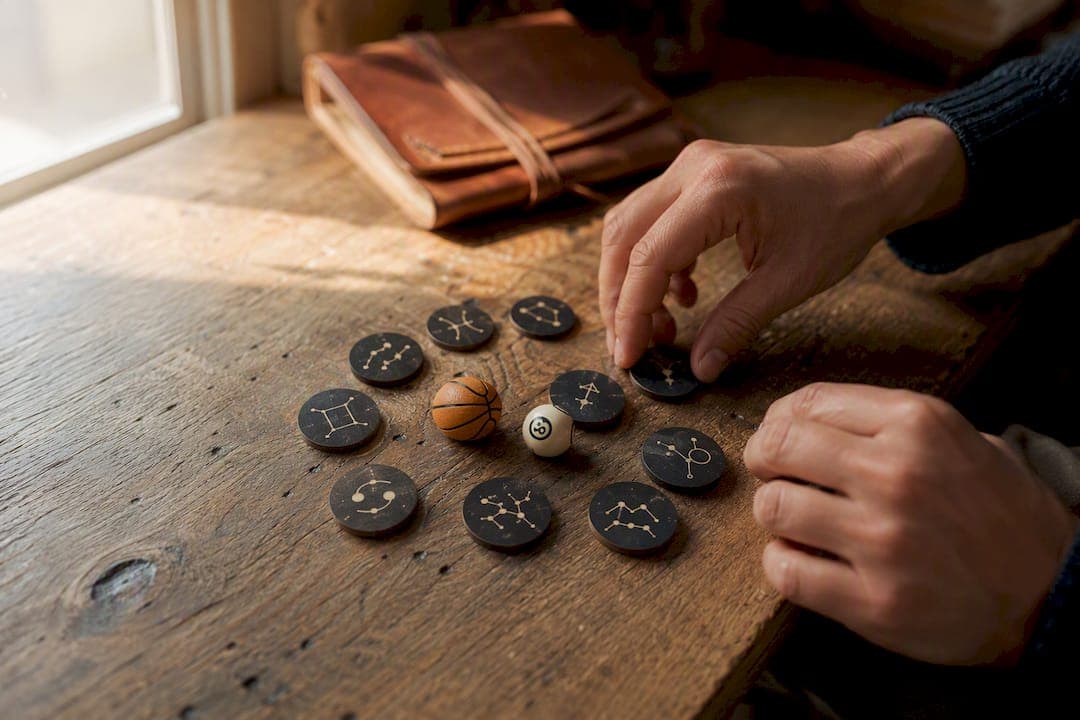
Astrology can flag probable timing patterns, momentum shifts, and upset risk in a sports matchup, but it cannot guarantee a winner. Treat astrology sports predictions as edge information layered on top of your own research, not a substitute for it. The most actionable signals are the ones you can check yourself before kickoff:
- The match chart cast for the exact kickoff moment, not the day's general horoscope
- The Moon's applying aspects in the hours surrounding the game
- Major planetary transits or retrogrades, such as Mercury retrograde, which astrologers often associate with potential upsets due to communication disruptions
If you want to try this today, cast a simple match chart by hand using the steps below, or run a faster version through Lotto Oracle's sports overlay, which weighs these same signals algorithmically.
Key Takeaways
Astrology sports predictions work best as a probability layer built on tight Moon orbs and consistent house rules, never as a guaranteed pick.
| Point | Details |
|---|---|
| Cast at kickoff, not game day | Use the exact start time and venue coordinates for the match chart, not a general daily horoscope. |
| Trust the Moon's orb rule | Keep lunar aspects within about five degrees, adding a degree only if extra time looks likely. |
| Weigh signals in order | Moon testimony outranks ruler strength, and outer-planet transits outrank neither on their own. |
| Log every forecast | Record your read before the result to catch hindsight and confirmation bias early. |
| Use Lotto Oracle for repeatability | Its sports overlay runs the same orb and ruler logic automatically and tracks outcomes across matches. |
Table of Contents
- Core Methods Behind Sports Astrology Forecasts
- How to Cast a Basic Match Chart and Run a First Forecast
- Reading the Signals: Moon Aspects, Combustion, and Outer Planets
- Where Sports Astrology Falls Short and How to Stay Safe
- A Worked Example and the People Behind the Method
- Why Tight Orbs Beat Loose Guesses
- Try a Repeatable Sports Forecast With Lotto Oracle
- Frequently Asked Questions
- Sources
Core Methods Behind Sports Astrology Forecasts
Sports astrologers don't use one technique. They pick from four overlapping methods depending on whether they're forecasting a single game or a whole tournament.
- Match charts treat the kickoff whistle as the "birth moment" of the event. The chart is cast for that exact time and location, and the game plays out the themes visible in the sky at that instant.
- Horary contest charts work similarly but are cast for the moment a question is asked ("who wins tonight's game?") rather than the game's official start.
- Team and player natal overlays compare a franchise's founding chart or an athlete's birth chart against the match chart, useful for tournament-long trend reading rather than one-off calls.
- Transit analysis tracks slower-moving planets across weeks or months, better suited to championship runs than a single 90-minute contest.
The Moon does the heavy lifting in short events. Because a match lasts roughly 90 minutes, practitioners lean on a tight applying orb of about five degrees for lunar aspects, sometimes stretching it to six degrees when extra time looks likely. A wider orb invites too much noise into a short window.
Retrogrades change the math. Mercury retrograde is widely treated by astrologers as a period when favorites underperform and communication breakdowns (a blown call, a missed assignment, a coaching miscue) tip games toward the underdog. Outer-planet transits like Saturn or Pluto crossing a team's natal placements tend to describe season-long momentum, not a single result.
Pro Tip: Save the deep natal overlay work for playoff or tournament runs. For a single midweek match, the kickoff chart and Moon aspects alone will tell you almost everything you need.
How to Cast a Basic Match Chart and Run a First Forecast
You don't need a chart calculation certificate to try this. You need the exact kickoff time, the venue's location, and about fifteen minutes.
- Lock the kickoff moment. Use the official start time and the stadium's coordinates, not the city center or the broadcast time in your own time zone.
- Decide your chart type. A pure match chart works for a single game. If you're tracking a team across a season, layer in the team's founding date as a secondary reference chart.
- Assign the houses. The common heuristic sets the home team (or the side considered the "established" party, such as a defending champion) to the 1st house and the away or challenger side to the 7th. Find each house's ruling planet, called the lord.
- Apply the Moon rule. Check whether the Moon is applying to an aspect with either team's house lord within that five-degree orb. Add a degree of tolerance if the matchup or league history suggests extra time is common.
- Scan for quick signals, covered in detail below: a Moon applying to one ruler and not the other, a combusted or retrograde lord, or a strong benefic aspect (Venus or Jupiter) touching one side's signifier.
- Draft your first-pass read based on which side's lord looks stronger and whether the Moon completes its aspect before the likely end of regulation time.
- Log it. Write down the chart, your read, and the actual result. Tracking outcomes over dozens of charts is the only way to learn which signals hold up in your own practice and which don't.
- Kickoff time and venue coordinates
- Chart type (pure match chart vs. natal overlay)
- House assignment and each side's lord
- Moon's aspect status and orb
- Your forecast and the final score, logged side by side
Reading the Signals: Moon Aspects, Combustion, and Outer Planets
Not every chart indicator carries equal weight, and treating them all the same is the fastest way to a bad read. Here's a rough hierarchy, from most to least reliable for a single match.
- Moon applying within the orb to a team's ruler: the strongest short-term signal, often pointing to that team's decisive action during regulation time.
- No tight lunar testimony at all: rather than a failed chart, this pattern often points toward a drawn-out contest, extra time, or a penalty shootout instead of a clean regulation win.
- A combusted ruler (a planet sitting within a few degrees of the Sun) reads as hidden strength rather than weakness. Astrologers analyzing the 2024 Stanley Cup noted combustion can describe a slow start followed by a late rally if later aspects turn supportive.
- Retrograde or debilitated rulers tend to produce underperformance or surprise letdowns from a favorite.
- Outer-planet transits (Saturn, Uranus, Pluto) describe tournament-level momentum. They rarely resolve a single match on their own.
A practical weighting order looks like this: Moon testimony first, ruler strength and condition second, outer-planet context last, used only to color the bigger picture rather than call the final score.
Public forecasters covering marquee events lean on the same hierarchy. Coverage of the 2026 World Cup shows astrologers stacking match charts, player transits, and narrative tools to land on a probability, not a guarantee. That distinction is worth sitting with before you place any weight on a forecast.
Where Sports Astrology Falls Short and How to Stay Safe
Astrology sports predictions are probabilistic. A well-cast chart gives you a lean, not a lock, and treating any forecast as certain sets you up for a costly surprise.
Two biases wreck most amateur forecasters. Hindsight bias makes a loss look "obvious" in retrospect once you already know the score. Confirmation bias makes you notice the aspects that fit the result and ignore the ones that didn't. Logging your forecast before the final whistle, the way you would in the luck calendar approach to timing decisions, is the only real defense against both.
If you're using these forecasts anywhere near real money, keep it bounded:
- Set a hard bankroll limit before you look at a single chart
- Confirm sports wagering is legal in your jurisdiction before acting on any pick
- Never treat astrology forecasts as a replacement for income
- Bring in a professional astrologer for complex tournament charts rather than trusting a rushed first-pass read
Pro Tip: If your first-pass chart feels ambiguous, it usually is. An unclear Moon testimony is itself information; don't force a confident call out of a genuinely mixed chart.
A Worked Example and the People Behind the Method
Author amsd, who writes the zodiac lottery strategy series on the Lotto Oracle blog, applies the same match-chart discipline described above to public sports forecasts before logging outcomes against the read.
Take a recent tournament final. The kickoff chart showed the Moon applying at just under four degrees to the home side's house ruler, well inside the five-degree limit, with no combustion on either signifier. The read: a regulation win for the home side, not a contest that needed extra time.
The chart didn't promise a blowout. It showed one side's ruler clearly favored and no sign the game would drag into penalties. That's the kind of read worth logging, whether it hits or misses.
- Moon aspect checked against the five-degree orb rule
- No combustion flagged on either team's ruler
- Forecast recorded before kickoff, result logged after
Lotto Oracle's sports overlay runs this same layered logic (match timing, pattern history, and numerology weighting) automatically, similar in spirit to how modern astrology apps blend natal, transit, and match-chart data into a single probability score.
Why Tight Orbs Beat Loose Guesses
I'd rather see a forecaster miss on a strict five-degree Moon rule than "win" on a loose ten-degree orb that could justify almost any outcome after the fact. Discipline is what makes a technique repeatable instead of a story you tell yourself after the score is final.
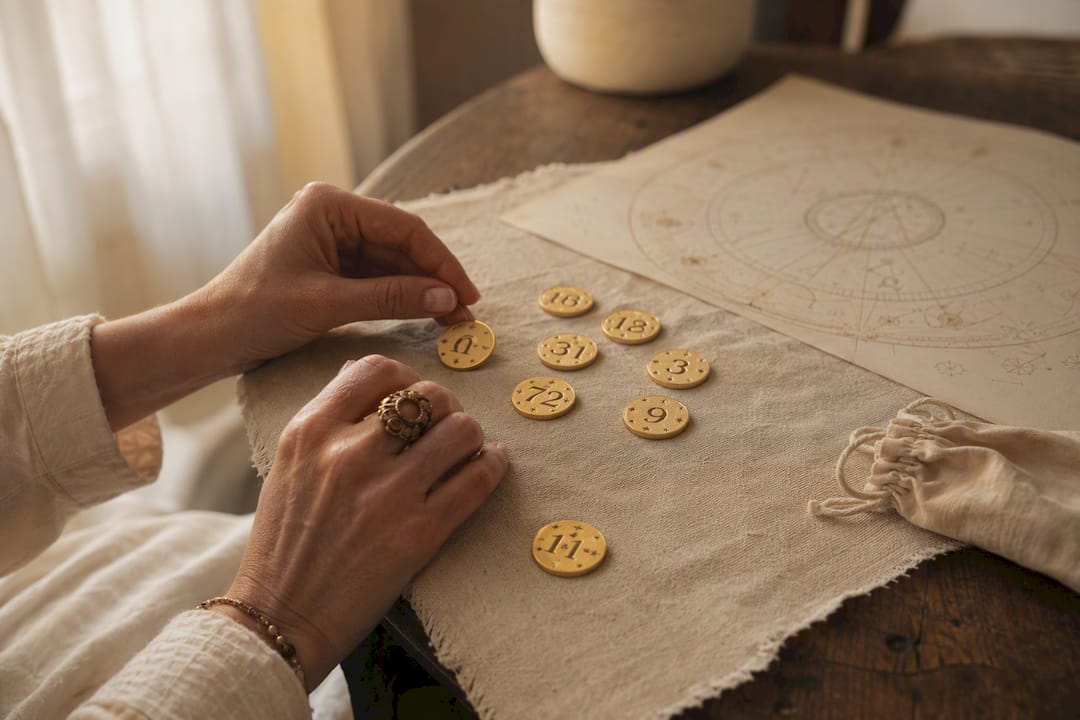
Lotto Oracle blends astrology with pattern analysis precisely because neither alone tells the whole story. Use these forecasts to decide what to watch for, not what to bet your rent on.
Try a Repeatable Sports Forecast With Lotto Oracle
Casting a match chart by hand works, but it takes time you don't always have before kickoff. Lotto Oracle is built for exactly this: its sports overlay runs the Moon-orb rule, ruler strength, and transit context in seconds instead of fifteen minutes with an ephemeris, and it logs every forecast automatically so you can see which signals actually held up over a season.
The app pairs that overlay with personalized numerology and zodiac profiles, plus trend tracking that flags patterns across dozens of matches instead of just the one in front of you. That combination is the real advantage over building charts from scratch every week: you get a trackable history without doing the logging yourself. It's a subscription product (monthly or yearly), and it doesn't sell tickets or handle wagers. It's guidance, not gambling infrastructure. Visit Lotto Oracle to start a subscription and run your next matchup through the sports overlay before kickoff.
Frequently Asked Questions
Can astrology reliably predict who wins a football match? No single chart guarantees a winner. Astrology sports predictions work as probability signals, strongest when the Moon cleanly favors one side's house ruler and weakest when the testimony is mixed.
What's the most important factor in a sports match chart? The Moon's applying aspect to a team's house ruler, checked within a narrow orb, is considered the most significant factor in forecasting outcomes within a typical match duration.
Does Mercury retrograde really affect game outcomes? Astrologers commonly treat Mercury retrograde periods as higher-risk windows for favorites, tied to communication breakdowns like missed calls or coaching errors rather than any change in raw team ability.
How do I know if a match will go to extra time using astrology? When the Moon shows no tight aspect to either side's ruler within the standard orb, that absence of clear testimony is often read as a signal the game will run long rather than resolve cleanly in regulation.
Is using astrology for sports betting legal and safe? Astrology itself isn't a gambling product, but any wager you place based on a forecast is still subject to your local gambling laws. Set a bankroll limit first and never treat a forecast as guaranteed income.
Sources
- Astrology
- Horary sports astrology — AstrologyWeekly
- Who Will Win the 2026 World Cup, According to Astrology — Today
- Astrological football forecast for the World Cup final 2026 — Louise of Arabia
- Puck-drop: Using astrology to predict the 2024 NHL Stanley Cup champion — Mel Priestley